The starting point
Plan an after-dark artwork as a complete public experience: arrival, invitation, viewing or participation, onward movement and closing. Agree access, operations and evaluation with the site team, alongside the artistic concept.
Give people a reason to arrive
A visual landmark can draw attention, but the public offer needs to be understandable. Explain what happens, when it operates and whether people need to join a session or simply encounter it. A scheduled projection and a drop-in interactive floor create different patterns of arrival. Consider how visitors will find accurate information before coming.
Look at the whole journey
Map the route from transport or the precinct entrance to the artwork and onward to other activity. Consider where people watch, wait or take part, and how these behaviours interact with the rest of the place. Discuss access needs early with the venue and relevant participants. The artwork is one part of a public setting, not a substitute for its operating plan.
Choose the balance between spectacle and play
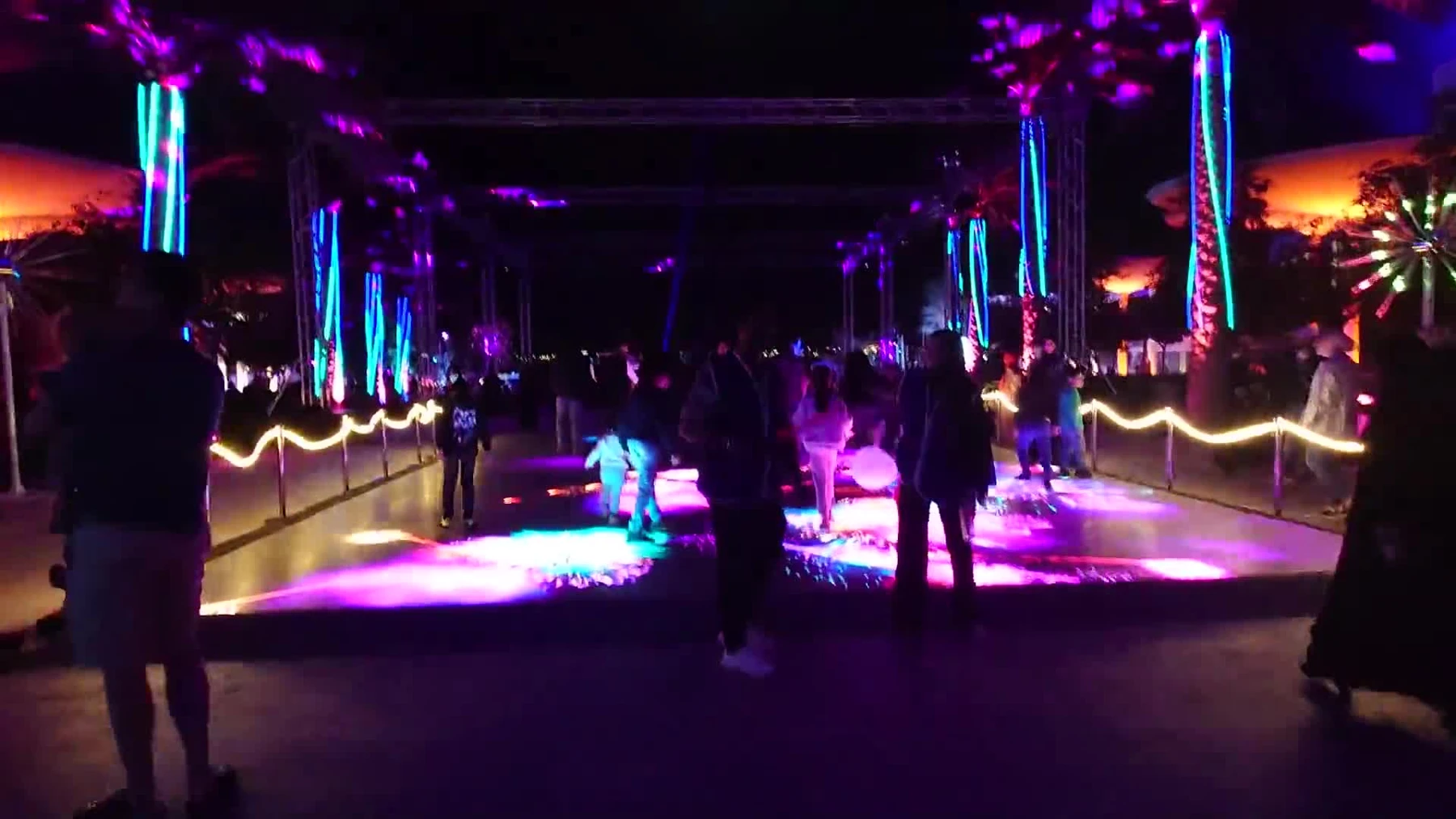
The Luminous Lusail case study concerns an interactive floor within a wider light festival in Lusail, Qatar. Movement shapes the audiovisual response. Geelong offers a different precedent: a building becomes a shared screen for an authored narrative. These examples can help a commissioner decide whether the main invitation is to watch, move, make or participate individually.
Make operating responsibilities explicit
Agree who facilitates the public encounter, monitors the system and responds when the work cannot operate as planned. Discuss site conditions, sound, access windows, technical support and the event’s procedures with the responsible partners. Those decisions belong to the specific venue and production. An attractive reference image does not establish operational suitability at another site.
Connect with the precinct without promising uplift
Screening times and visitor information can be coordinated with other cultural activity, dining or transport. That creates an opportunity to explore a longer evening visit. It does not establish a spending increase in advance. If local economic activity is an objective, agree how partner information and appropriate baseline evenings will be used to examine it.
Evaluate the installation separately from the festival
Whole-event attendance should not be presented as the audience for one artwork. Record the scope of each measure: viewers, completed interactions, operating hours or voluntary survey responses. Keep participant estimates distinct from confirmed counts. Visitor enjoyment, accessibility feedback and technical reliability can all be useful without pretending to measure every possible effect.
Start with a pilot when the format is new
A limited test can help the team understand an interaction, waiting pattern or viewing arrangement before expanding it. Agree what the test must resolve and what would lead to changes. Use the commissioning checklist to assemble the site information and the selected-work collection to identify a relevant precedent. A proposal remains a proposal until feasibility, delivery and results are documented.
Projects mentioned
Prepare your brief
Use the public briefing checklist, explore interactive public art or projection mapping, then request a concept call.