The starting point
Art can give people a reason to visit, gather and explore a place after dark. Its value depends on the complete visitor experience: a clear invitation, an appropriate setting, access, operation and connections with the wider destination. Increased spending or longer stays need evidence rather than assumptions.
Decide what the destination is inviting people to do
A night-time offer can invite visitors to watch a story, move through an environment or change something through participation. Each creates a different rhythm. A scheduled projection gives people a time to gather; a responsive installation offers an activity within their visit. Describe that invitation before deciding which visual reference looks most impressive in a photograph.
Use delivered projects as references for experience
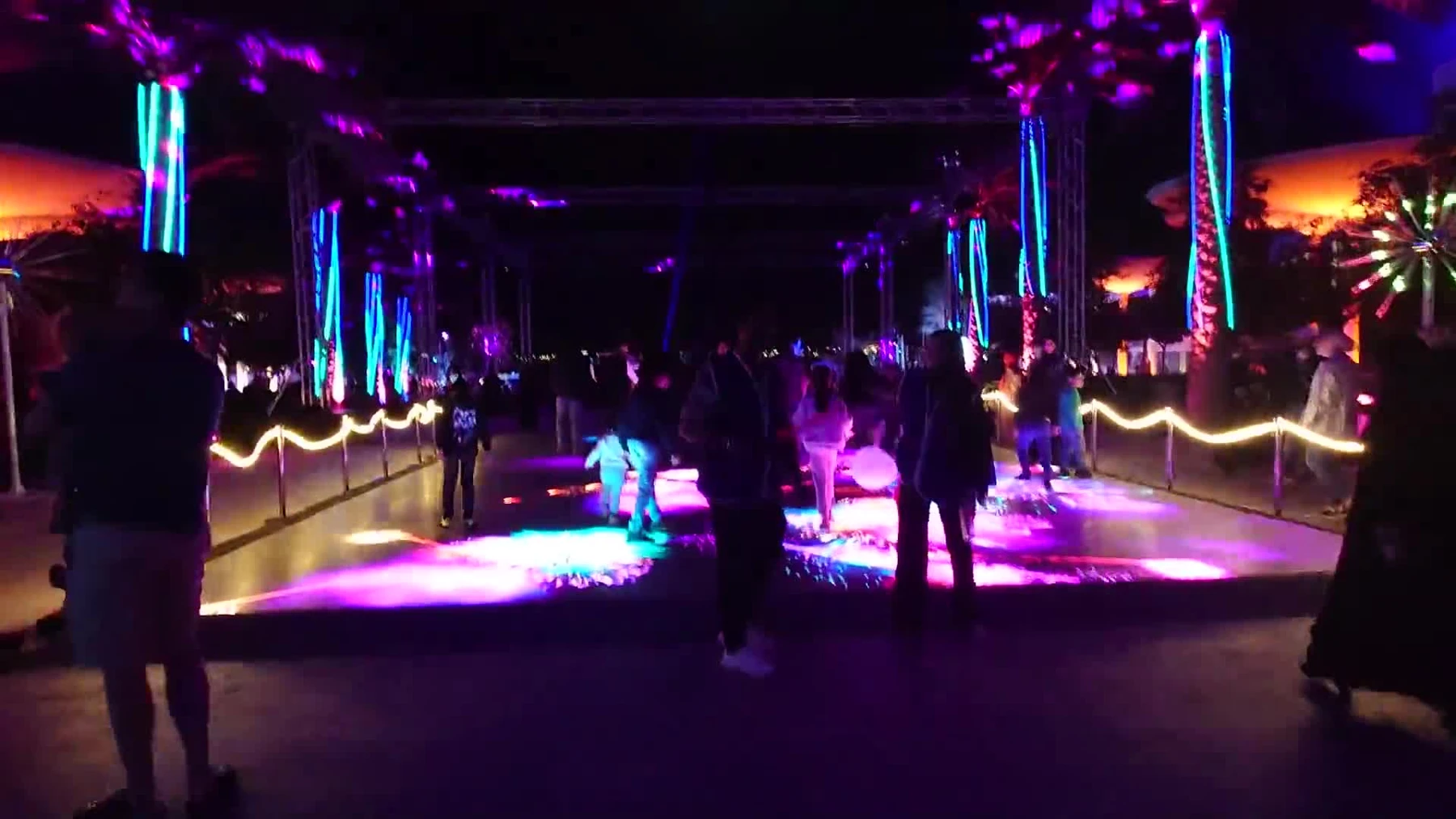
Luminous Lusail provides a reference for responsive floor work within a wider festival in Lusail, Qatar. Georgie’s contribution sits within that production. The Geelong portfolio offers a different model: an authored audiovisual narrative presented on civic architecture. The distinction matters when planning audience roles. Neither reference alone confirms a new site’s feasibility or its likely economic effect.
Make the experience belong to the place
Ask what visitors should notice about the setting and whose stories should be present. A distinctive building, landscape or community can shape the creative direction. Develop that content with the relevant contributors and permissions. A local story is more than a location name placed over generic imagery; it can influence the work’s rhythm, sound, visual language and invitation.
Connect the artwork to the rest of the evening
Consider how people find the work, where they wait and what happens afterwards. Coordinate opening information with the venue and surrounding programme. If dining, performance or another attraction is part of the visitor journey, make the connections understandable. A coherent plan gives partners something concrete to discuss, without promising that every viewer will visit a nearby business.
Separate an installation’s results from the event’s results
A festival’s total attendance is not the audience for one artwork. Decide whether you are counting viewers, participants, sessions or visits, and label the result accordingly. If onward activity matters, agree an appropriate survey or partner measure. Keep design ambitions such as destination recognition separate from findings that have actually been collected.
Give a proposal the right next step
A new destination concept may need an audience pilot, site assessment or feasibility study before a full commission. NUMINA is presented in the portfolio as a proposal, not a completed landmark. Use that status honestly when discussing its possible applications. A useful first brief describes the place, public purpose, operating context and questions that the next stage must resolve.
Common questions
Can the artwork be the whole evening programme?
Sometimes the brief is deliberately focused on one work. In other settings it is one part of a wider event. Define that relationship with the destination and production partners instead of assuming a single format.
Does a successful festival elsewhere prove that our site will work?
No. A reference can demonstrate a creative approach. Site conditions, access, audience behaviour, delivery responsibilities and permissions still need assessment for the new presentation.
How can we examine a contribution to the local economy?
Agree the question, suitable comparisons and available partner information before the event. Keep voluntary survey findings and observed activity distinct from an unsupported claim of spending caused by the artwork.
Explore the projects
Project references
Read next
Prepare a conversation
Use the public briefing checklist, explore interactive public art and projection mapping, then request a concept call. Start with your site, audience and intended experience.