The starting point
Interactive public art connects a person’s action with a response in the artwork. Movement, a portrait or an interface can change animation, sound or another part of the experience. The creative question is what that response lets someone express, discover or share.
Start with an invitation, not a sensor
Before choosing equipment, describe what a visitor encounters. Do they make an image, move through a space, tell a story or change a shared scene? A clear invitation helps someone decide whether to participate. It also gives the creative team a practical way to explain the work without asking visitors to understand the software behind it.
Connect action, response and meaning
Think of the interaction as three connected decisions. First, what action can a person take? Second, what changes when they act? Third, why does that change belong to this artwork? A technically responsive surface can still feel arbitrary if the connection is unclear. The relationship between action and meaning is part of the artistic composition, alongside colour, movement and sound.
Different works give people different roles
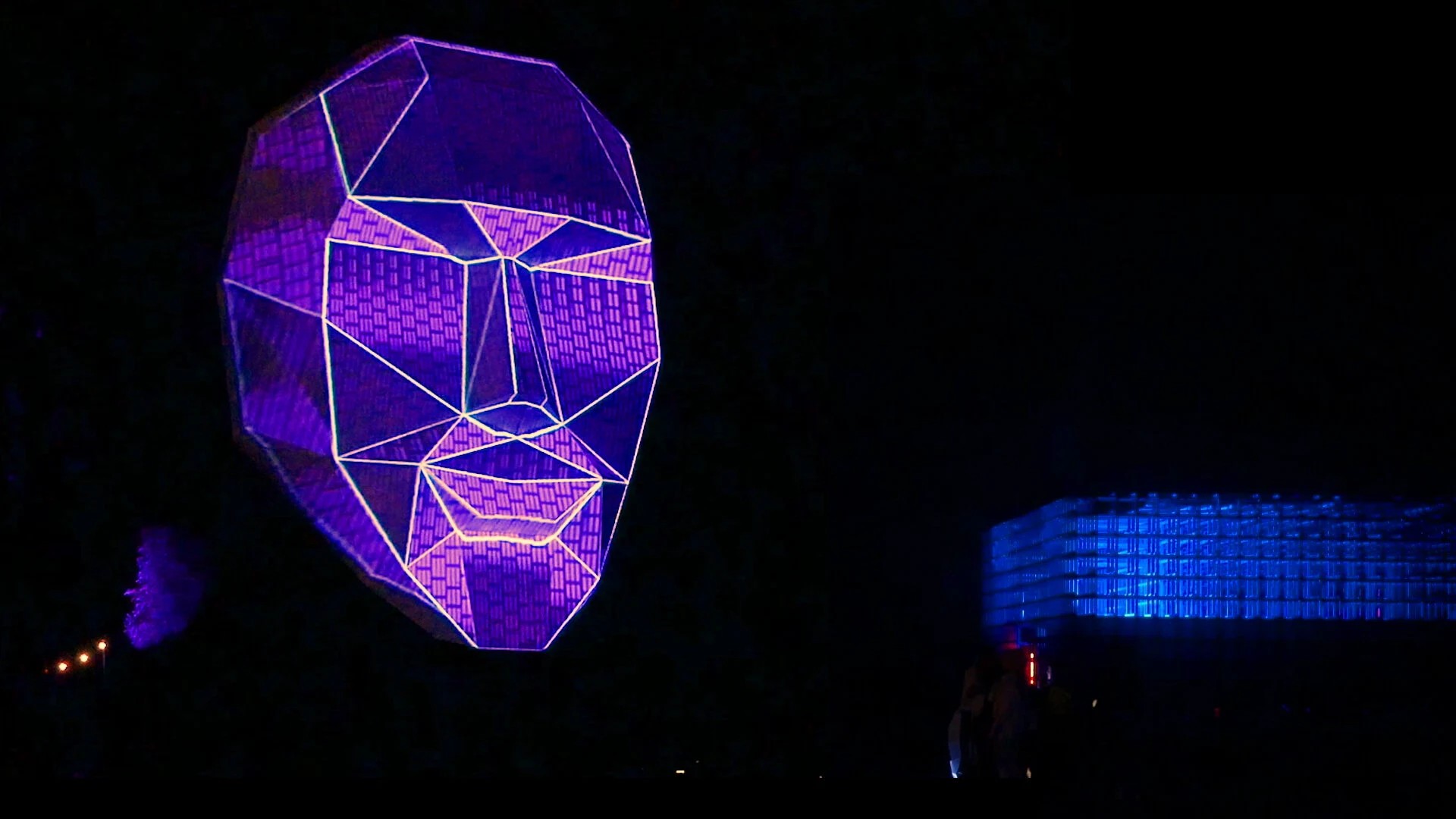
ECHO/OHCE brings a participant’s face into a large projected sculpture. Electric Puppet lets people assemble a character and animate it through movement. RIPPLE places responsive imagery within a water-based installation. These examples demonstrate different relationships between a person and a shared image. They should inform a new brief without becoming a promise that one format will suit every audience or site.
Design for the person watching as well as the person taking part
An individual may control a moment while others experience it from a distance. Consider what spectators can understand before joining, where they can stand and how they recognise a change of participant. A useful brief describes both roles. It also considers people who choose to watch, need more time or would benefit from another way of entering the experience.
Test the invitation in the actual setting
A demonstration in a quiet room does not answer every question about a busy public place. Test whether people understand where to begin, whether the response is visible and how the interaction ends. Observe waiting, repeat use and requests for help. Use the findings to refine the encounter with the venue team, rather than treating audience confusion as a failure to follow instructions.
Turn curiosity into a useful commission
Bring the audience, site, dates and intended experience to the first conversation. Identify who manages the venue and what information is still missing. Ask which parts of a reference project interest you: personal authorship, shared viewing, movement, story or scale. That gives an artist more useful direction than a list of technologies or an instruction to make something interactive.
Common questions
Is projection mapping always interactive?
No. Projection mapping describes how imagery relates to a surface. It can present a fixed audiovisual sequence or form part of a responsive artwork. The audience’s ability to influence the work is a separate design decision.
Does interaction require visitors to use a phone?
Not necessarily. An interaction may use movement, a shared interface or another input. Choose the method after discussing the audience, access needs and physical setting.
Does an interactive artwork automatically record people?
No. Responsiveness and recording are different functions. If a proposed experience captures or retains portraits, voices or other contributions, agree what happens to them before the system is tested.
Explore the projects
Project references
Read next
Prepare a conversation
Use the public briefing checklist, explore interactive public art and projection mapping, then request a concept call. Start with your site, audience and intended experience.