The starting point
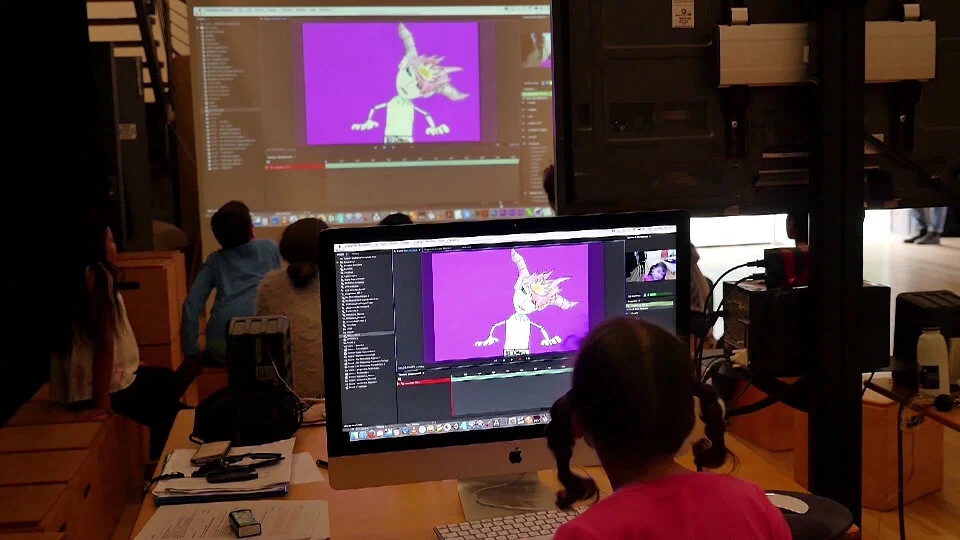
Creative technology can connect a learner’s own ideas with visible or audible responses. Drawing a character, animating it through movement and sharing a result can provide practical opportunities to explore expression and digital media. Learning goals and evidence should be agreed for the group rather than assumed from the technology.
Choose the learning question before the tool
What should participants be able to explore or explain by the end? It might be a relationship between movement and animation, a way to develop a character or an experience of collaborative storytelling. A defined question gives the workshop a purpose beyond trying equipment. The tool can then be selected for the activity and the people taking part.
Let participants make something recognisably their own
Electric Puppet connects character creation with animation driven by a participant’s body. Georgie describes its early robot-making format in her QUT interview. This is a useful reference for joining personal choices with responsive media. A new learning programme should decide which choices participants control and how much preparation or facilitation those choices require.
Build a sequence people can follow
A workshop might move from drawing or collage to a movement experiment, then to sound or a shared story. A proposed sequence should make each stage understandable and leave time to reflect. It does not need to introduce every available technique in one session.
Plan different ways of taking part
Discuss the group’s ages, experience, communication preferences and access needs with the host. Consider who may prefer drawing, speaking, moving, organising a story or watching before joining. Ask how a seated participant could encounter a movement-led activity. Those questions help shape the workshop; they are not a blanket claim that a particular interface is accessible to everyone.
Agree what sharing the result involves
A shared screening or public showcase can give the work a clear destination, but it is a separate decision from making it. Identify whose drawings, voices or images may appear and which permissions the host needs to arrange. Discuss attribution and whether participants can keep a copy. Keep the proposed presentation proportionate to the learning brief and available support.
Look for evidence of the intended learning
A completed animation is one output; understanding and confidence are different questions. Invite participants to describe a choice they made, demonstrate a technique or reflect on working together. The host can choose an appropriate way to record this. Existing workshop delivery does not by itself prove improved attainment or a lasting wellbeing effect, so report only the evidence actually collected.
Common questions
Do participants need previous animation experience?
That depends on the planned format. Share the group’s starting point with the artist so the activities, support and technical steps can be scoped appropriately.
Should a workshop end with a public screening?
Only if that supports the brief and the necessary permissions and support are in place. An internal sharing session or participant reflection may be more appropriate for some groups.
Can a programme connect with a local environment theme?
It can be proposed, for example through participant-created imagery about a local place. Agree the learning content and any specialist or cultural contributions with the relevant partners before presenting it as an established programme.
Explore the projects
Project references
Read next
Prepare a conversation
Use the public briefing checklist, explore interactive public art and projection mapping, then request a concept call. Start with your site, audience and intended experience.