La Monnaie / De Munt · Brussels
NORMA — OPERA
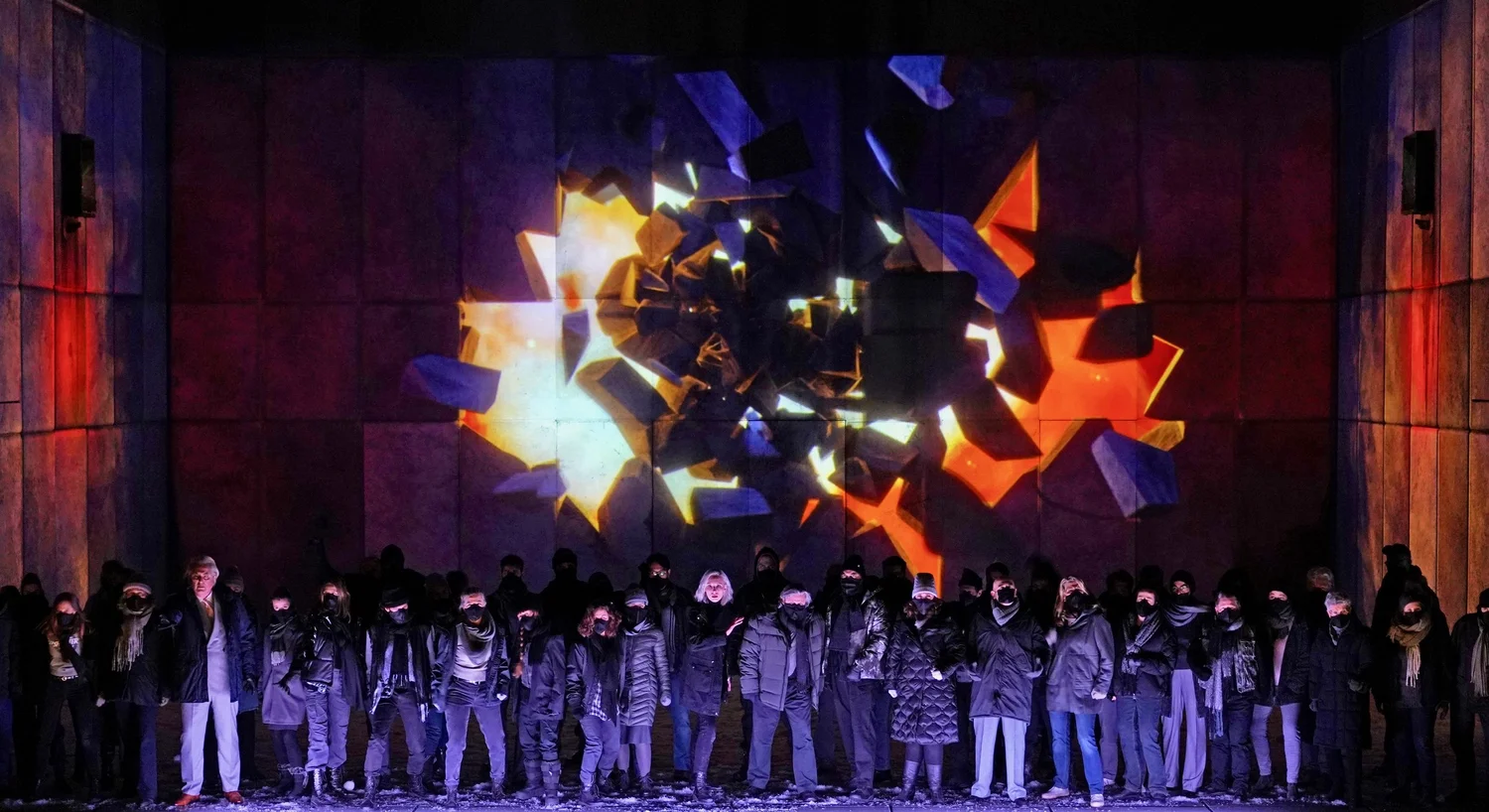
For Christophe Coppens’ production of Bellini’s Norma at La Monnaie / De Munt in Brussels, Georgie created two digital scenes that connect voice, emotion and architecture. A virtual landscape responds to the singer’s vocal intensity, revealing Norma’s private emotional world. At the choral finale, projection mapping makes the concrete set appear to fracture, turning the stage into a dramatic visual rupture.
Case study
Case study · October 2026 · Pages 21, 22
Norma
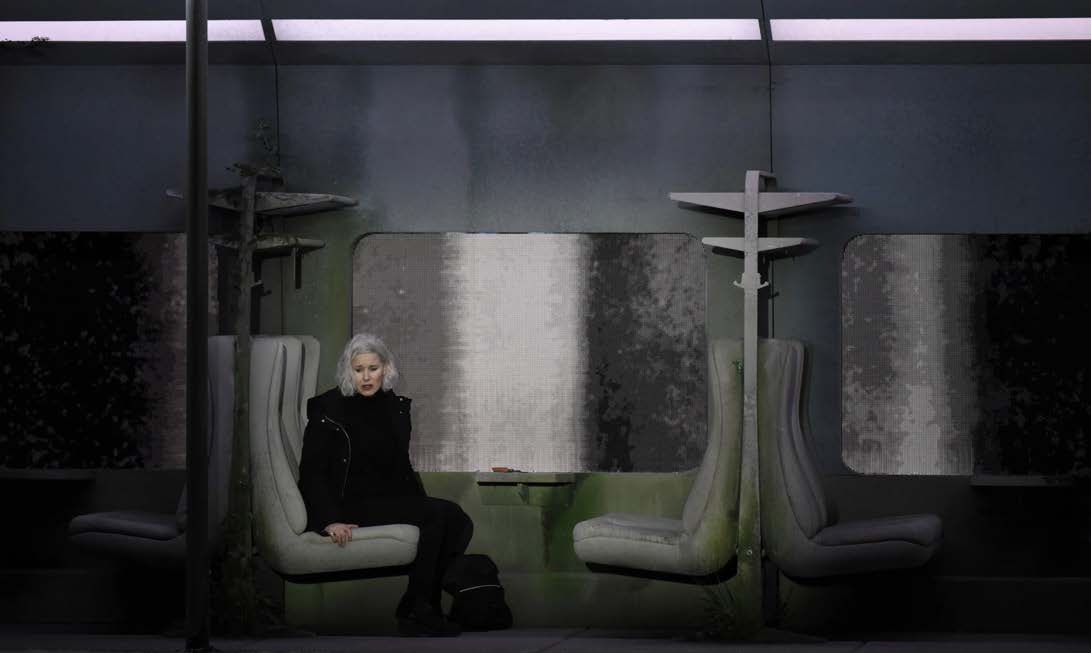
Responsive video for Bellini's opera Norma's private world: a projected landscape shaped by the singer's voice. Created for fashion designer and director Christophe Coppens' production of Vincenzo Bellini's Norma at La Monnaie / De Munt, Georgie Pinn's video work moves between the private and the monumental. One scene turns Norma's anger and jealousy into a virtual landscape that responds to the singer's voice: as her vocal intensity rises, the abstract world changes with her. The second uses projection mapping to fracture the concrete set at the choral finale.
The production
Coppens brought the visual sensibility of a leading fashion designer to Bellini's opera, building a stark world of concrete, vehicles and volatile emotion. Within that physical design, Georgie's two digital scenes intensify distinct dramatic moments: a private psychological landscape for Norma and a rupture in the architecture at the finale. The media extends Coppens' vision while keeping the singers and set central.
Georgie's contribution
Georgie worked with Coppens' visual team to translate his concept into responsive digital imagery. The collaboration shows how her practice can augment a leading fashion and set designer's ideas while keeping the physical design and performers central. Set design: Christophe Coppens and i.s.m.architecten. Video for these scenes: Georgie Pinn.
Sources: La Monnaie / De Munt production programme; Georgie Pinn's account of the two scenes and supplied image.
Public value and next application
The finale / projection-mapped scenography
Projection makes the concrete wall appear to fracture at the climax. In the finale, projection mapping makes the concrete blocks appear to explode. As the chorus reaches its peak, the back wall opens visually onto a fiery hell. The effect is fitted to the built set, so an architectural surface becomes a changing dramatic space. It contrasts with the intimate voice-responsive landscape earlier in the work.
Why this work matters
These scenes show Georgie's ability to collaborate with a leading fashion and set designer at two scales. The voice-responsive landscape follows the singer's emotional trajectory in real time; the mapped finale synchronises image, architecture and chorus into a collective climax. In both, digital media makes Coppens' dramatic ideas tangible while leaving the performers and built set at the centre.
Future stage application
Future commissions can connect live voices and physical scenography through jointly designed responsive media. Prototype the visual response with performers, then fit projection to the built surfaces. No audience-response data is claimed for this production.
Sources: La Monnaie / De Munt production programme; Georgie Pinn's account of the two scenes and supplied images.